
Cardiac and Vascular Hemodynamics

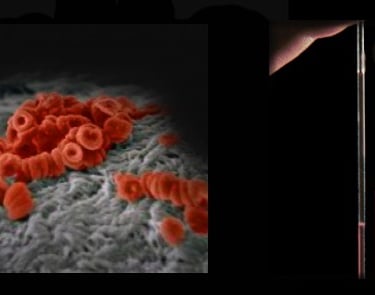
Building the Mental Models That Turn Invisible Forces into Clear Clinical Decisions.
“I learned so much in just a few days—I now have the tools to understand the heart. It completely changed how I think about what I’m seeing.”
— Former Attendee, Echocardiographer
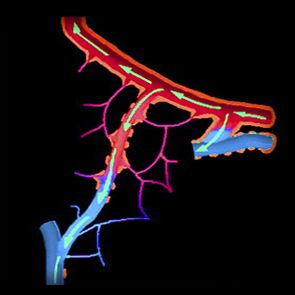
A Visual, Bedside Way of Thinking
Overview.
Like our Ultrasound Physics and EKG Interpretation tutorials, this experience is designed to strengthen the thinking that underlies every protocol you follow at the bedside. This is the cornerstone that anchors every element of cardiovascular function. It lies at the core of every clinical —and registry exam—question.
We are all trained to execute workflows—but lasting clinical confidence comes from understanding the physiology beneath them. Hemodynamics lives almost entirely in the mind: pressure, flow, resistance, compliance, and perfusion are invisible forces. When they are learned only as equations or isolated facts, they remain fragile. When they are understood visually and conceptually, they become dependable tools.
This tutorial brings cardiac and vascular hemodynamics back to life through clear visual models and narrative analogies that allow you to reason through unfamiliar exam questions and real patient findings. Afterward, you’ll find yourself discussing what you see with a new clarity and authority—one that others immediately recognize.
As cardiac and vascular ultrasound have increasingly merged in clinical practice, the need for an integrated understanding has grown. Not coincidentally, these two specialties consistently rank among those with the highest registry exam failure rates. This course was built to close that gap—not by adding more memorization, but by restoring understanding.
We begin at the heart and examine every force that influences pressure, flow, and perfusion throughout the circulation—and back again. We explore the system from the inside out, including the global influence of the brain and the precise local control exerted at the level of smooth muscle and capillaries. By the end, no major mechanism is left unexplored.
As with our Physics and EKG tutorials, the goal extends far beyond passing an exam. It is about thinking clearly, reasoning confidently, and contributing meaningfully to patient care.
Who Will Benefit.
This tutorial is intended for clinical professionals involved in cardiovascular care who want a complete, integrated framework for understanding blood flow—under normal conditions, during stress, and in disease.
You don't need an extensive background in hemodynamics to benefit. In fact, those who feel they once learned the material but never fully owned it often gain the most. This experience reconnects long-forgotten fundamentals into a coherent mental model that finally makes sense.
Our attendees have included:
This tutorial adapts seamlessly to a wide clinical audience, including:
Cardiac Care & Critical Care Nurses.
Emergency & Critical Care Clinicians.
ACLS Paramedics.
Cardiovascular & Advanced Practice Sonographers.
Medical Students, Interns, and Residents.
Researchers seeking physiologic clarity behind the metrics.
Whether you want rapid mental protocols, a deeper physiologic explanation, or both—this experience meets you where you are.
Educators will also gain a rich library of explanations, visual analogies, and teaching strategies that translate immediately into their own classrooms and labs. This content and delivery have been refined over decades and presented to many thousands of professionals worldwide.
Topics.
How cardiac muscle contracts and why it responds uniquely to changes in stretch and resistance.
Moment-to-moment relationships between electrical activity, myocardial mechanics, intracardiac pressure, and flow.
How echo and cath labs determine peak and mean pressure gradients and cardiac output—and where common pitfalls occur.
Plug flow versus laminar flow and why vessel geometry, including the aortic arch, matters.
Laminar flow, laminar gradients, and plasma skimming.
Turbulence, Reynolds number, and clinically relevant applications.
Poiseuille’s Law: its derivation, meaning, and limitations.
The three determinants of vascular resistance and their individual clinical significance.
Viscosity, Newtonian versus non-Newtonian behavior, the Fåhræus–Lindqvist effect, and capillary hemodilution.
Vascular compliance and its effect on volume flow.
Series versus parallel resistance and why collateral circulation rarely matches the original conduit.
Microcirculation and how capillary structure varies by tissue.
Metarterioles and their role in directing capillary flow.
Neural regulation of circulation, including sympathetic and parasympathetic influences and paradoxes.
Capillary hydrostatic pressure and its role in tissue perfusion.
Local control of capillary flow and its independence from neural regulation.
Venous resistance at the macro- and microvascular levels.
Deep versus superficial venous systems: how they function—and fail.
Right-heart failure, its effect on venous flow, and how organs attempt to protect one another.
Objectives.
This course is conducted independently of any commercial or institutional support. Faculty have no financial or commercial interests that influence the content.
Upon completion of this activity, participants should be able to:
Describe the flow of blood from the left ventricle through the body and back, identifying the entirety of physical and biologic forces that influence it at rest, during exercise, and in disease.
Relate these forces to the quality of tissue perfusion at any location under any circumstance.
Explain how common mechanical, pharmacologic, and invasive interventions affect pressure, flow, resistance, compliance, and perfusion.
Scheduling & Availability.
Like our Physics and EKG tutorials, this Hemodynamics experience is offered once per year as a focused, small-group program.
Because enrollment is intentionally limited, we encourage interested individuals and departments to express interest early. Doing so allows us to provide advance notice, coordinate group participation, and—when appropriate—align this tutorial with related training such as Physics, EKG, or hands-on cardiovascular courses.
If you’d like to be notified when scheduling opens, or to explore hosting this tutorial for your group, we welcome your inquiry.
Investment.
This experience is offered as a private tutorial for your group at a site you specify, worldwide. Content may be modified or combined with any portion of our hands-on, interpretive, or workshop programs.
The total cost is all-inclusive and based on location, number of participants, and length of training. For groups of three or more, the cost is often comparable to—or less than—attending individually. When lost productivity is considered, on-site training frequently becomes the most economical option.
Training Clinicians Worldwide Since 1981.
Testimonials reflect individual learning experiences. Growth in skill and confidence develops through guided training, continued practice, and personal commitment.
Contact
972 | 353-3200 USA Central Time
Course Campus:
4300 Wingren Drive
Irving (Las Colinas), Texas 75039
Mail | FedEx Address:
Box 101
Colleyville, TX 76034
Courses & Learning
Hands-On Clinical Courses
Ultrasound Physics
Cardiovascular Hemodynamics
EKG- From Atoms to Arrhythmias
Privacy Policy | Terms of Use. | Disclaimer
We’re committed to accessibility. View our Accessibility Statement.
The most powerful technology in medicine
is the person using it.