POCUS Training for Real-Time Clinical Decision Making
The guided two-day experience that empowers you to make immediate, informed decisions when time and clarity matter most.
Dates→
“Ultrasound is now another power tool in my diagnostic black bag.”
-Steven Chastain, MD
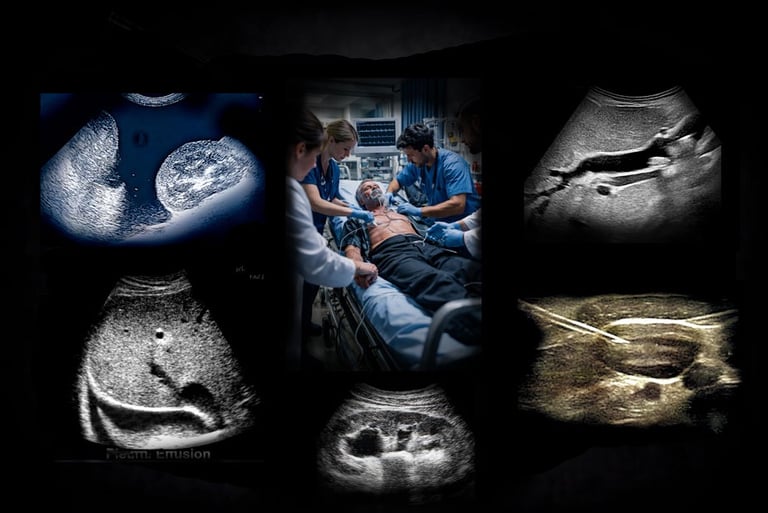
eFAST, RUSH & FATE. Learn to act—not just scan.
Get Here. Learn It. Practice It. Serve.
Seeing What Matters When Time Is Short.
In this hands-on POCUS course, you'll develop reliable bedside scanning skill and the clinical judgment to use it with confidence when decisions matter most. Instruction centers on purposeful image acquisition, physiologic interpretation, and disciplined integration into patient care—taught through small-group scanning, direct faculty guidance, and repeated practice. This course reflects a hands-on teaching model shaped in high-acuity clinical environments, emphasizing clarity of thought, pattern recognition, and calm execution rather than rote protocols or preset dependence. And all pertinent physics/instrumentation principles are discussed in straightforward, memory-friendly detail in your lifelong reference course manual.
Because You Have to Scan Intuitively—Why This Course Matters.
POCUS is only as powerful as the clinician’s ability to execute it under pressure. This hands-on POCUS course matters because it trains you to make ultrasound a decision-ready tool—rapidly, accurately, and deliberately—where time and clarity matter most. You practice focused, high-impact scans with expert guidance, learning when to trust your image, how to interpret it in context, and how to incorporate it into care pathways that affect patient management immediately.
How Each Professional Benefits By Attending.
ER & Critical Care Physicians, Nurses, and Paramedics.
You’ll return to the bedside able to assess right and left heart function on the spot and make confident, time-critical decisions long before a formal echo report is ready. CVP, tamponade, and pulmonary complications—all evaluated accurately and fast, starting your first day back on duty.
All Allied Health Professionals.
No prior experience required. If you’re returning to an active clinical site, you’ll leave with a solid foundation, proven protocols, and the confidence to use them immediately. This weekend will show you that you can do it—and set you on a path for lifelong mastery in ultrasound.
Anesthesiologists & PACU Nurses.
This course equips your Team to run the PACU with full confidence. Both physicians and nursing staff will leave ready to perform at their highest level.
Veterinary Medicine.
Ultrasound for canine and human applications follows the same principles. With today’s affordable, high-performance systems, you can easily add this skill to your practice. You’ll build confidence quickly—and our post-course mentoring ensures it lasts.
Research & Medical Device Professionals. Research, Engineering, Marketing, Sales, Management, Applications, Service Engineers
You’ll gain the ability to identify and measure nearly any aspect of organ anatomy or blood flow motion with precision. For Device Developers and the entire Support Team, this experience feeds new facts, perspectives, and ideas that translate directly into better products, stronger marketing, and a competitive edge..
What You'll Learn Clinically.
Comprehensive ultrasound physics and instrumentation in common language: all the knowledge you need to be able to stand at the bedside with the career ultrasound professionals who will be watching you forever.
The one simple technique that will take three years off your learning curve and add a decade to your career.
Systematic, quick and confident FAST, RUSH and FATE protocols.
The simple mindset to quickly acquire every standard echo view without having to think.
Speed reading cardiac wall motion abnormalities without AI: The simple process to take a year off your expertise curve.
The usual and precise means to evaluate Central Venous Pressure: more than just IVC respiratory variation.
Proving and localizing pleural effusion and documenting pneumothorax & consolidation.
Central and peripheral vascular access: Using all the tools.
Clot or not: Why ultrasound prediction of echogenic aging of thrombus is a myth.
Make the machine tell the truth: how to absolutely avoid being tricked by image artifacts.
Make the machine work for you (even with automated user controls): Three things every clinician must know every time.
How to analyze and document every pathologic finding: Taking the right steps, using the right words.
Point-of-care ultrasound (POCUS) is reimbursable in many U.S. clinical settings when it is medically necessary, properly documented, and correctly coded. This page explains the standards payers expect, how “quality” is evaluated in real practice, and where to verify current reimbursement values.
POCUS Reimbursement: Eligibility, Quality Programs, and Payment Values (U.S.A.)
Reimbursement Eligibility Standards.
POCUS reimbursement eligibility rests on three essentials: medical necessity, permanent image retention, and a written interpretation in the medical record. Payers must be able to verify what was done, why it was done, and what was found.
At minimum, documentation should demonstrate that the ultrasound addressed a focused clinical question and directly informed patient care.
Documentation Requirements That Support Payment
Strong POCUS documentation typically includes: clinical indication for the exam
Views obtained (brief and focused)
Findings (positive or negative)
Clinical impression or conclusion
Confirmation that images or clips were saved and linked to the encounter.
Limited vs. Complete Exams and Coding.
Most POCUS exams are focused assessments designed to answer a specific bedside question. These typically align with limited ultrasound CPT codes rather than complete diagnostic studies. Using the correct scope is essential, as complete codes require broader documentation and image sets than most POCUS applications involve.
POCUS Quality Programs and Incentives.
In practice, quality is measured by consistency, interpretive accuracy, and the ability to verify the exam after the encounter. There is no single nationwide POCUS-specific quality incentive program. Instead, quality is typically evaluated through:
Institutional credentialing and privileges.
QA/QI image and interpretation review.
Standardized documentation templates.
Payer audits based on documentation completeness.
Reimbursement Values and How to Verify Them.
POCUS reimbursement varies by CPT code, payer, site of service, and geographic location. Medicare publishes annual payment values through the Physician Fee Schedule, which should be used as the baseline reference.
Private insurers often reimburse at rates above Medicare, while Medicaid reimbursement is commonly lower. Actual payment amounts should always be verified through payer contracts and official fee schedule tools.
Official Reference Tools:
CMS Physician Fee Schedule (Medicare payment lookup)→
ACEP Ultrasound Reimbursement FAQs→
Download this guided Clinical Documentation Kit→
How the Course Typically Unfolds.
We start immediately at the bedside with probe in hand, introducing core FAST/RUSH protocols so you begin scanning on the very first minute of class. Hands-on practice is intense and structured: learners develop the hand-eye skills to acquire clear views quickly while faculty reinforce system controls, Doppler use, and targeted protocols that directly impact clinical decisions.
Scanning sessions are interwoven with short, high-yield discussions that tie anatomy and findings back to real patient scenarios. You repeatedly cycle through focused clinical targets — trauma windows, fluid detection, basic vascular access guidance — so that pattern recognition becomes automatic.
Outside of structured sessions, the lab remains accessible for independent or peer-to-peer practice, letting you refine technique at your own pace. By the end of the course, you’ll walk away with practical skills you can apply immediately in emergency, inpatient, and point-of-care environments — and lifelong support whenever you need it.
Our Approach.
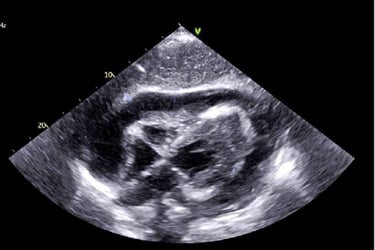
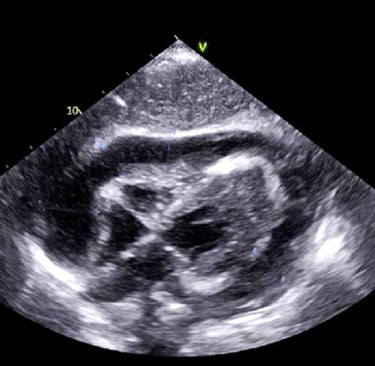
Ultrasound skill is built through guided experience, not passive observation. Instruction centers on live scanning, immediate feedback, and repeated practice—so technique, interpretation, and clinical reasoning develop together.
We teach in small groups to allow faculty to adjust instruction in real time, responding to each learner’s background, pace, and questions. Concepts are revisited from multiple angles, helping understanding take root quickly and remain reliable under clinical pressure.
The emphasis is not on memorizing images or following rigid protocols, but on learning how to think at the bedside—recognizing patterns, understanding physiology, and making deliberate decisions that translate directly to patient care.
Tuition— Your Learning Investment.
Smart Career Growth— Zero Debt→
This investment reflects the micro-class size, intensity of hands-on instruction, detailed course materials you'll reference forever, unlimited scan-lab access, and lifetime post-course mentoring. Hot breakfast and light lunch are included daily.
Tuition: $1000 (USD) Friday-Saturday..
Friday 9am-4pm. Adjourn Saturday by 3pm.
Scan Lab open Saturday evening after class.
If tuition is a concern, we’ve already thought about that.
Download this guided Employer-Sponsorship Agreement Kit→ that lets your workplace pay for the course while you agree to stay for a defined time afterward. It’s one of the easiest ways to advance your skills without taking on new expenses.
Most attendees say the Course pays for itself in just a few weeks of bedside application.
About CME Credit.
This course does not offer CME credit—by design.
That choice allows us to teach with complete flexibility, adapting instruction to your background, pace, and clinical goals rather than a committee's preset agenda.
Our focus is hands-on skill development, clinical reasoning, and lasting bedside confidence. Many clinicians choose to pair this experience with separate CME activities that align with their own professional requirements. If we can help direct you to such low- or no-cost CEM resources, we'lll be delighted to assist.
What Our Participants Said.
The overwhelming majority described the experience as excellent, transformational, and more effective for them than other national ultrasound courses.
Students repeatedly mention they learned more in a few days than in months elsewhere.

You've Got Questions?
Let's face them together.
Your decision is transformational. Ask us anything and get a straight answer. We want to address your every question, because You and what You’re about to do are important.
Your Next Step Is Closer—and Brighter—Than You Think.
You've come so far already— don't quit.
You’ve considered the most demanding parts: the time apart from the people who matter, the disruptions of travel, the honest moments of doubt, and the uncertainty we all feel when something truly matters. Here, you are safe. Here, you are supported. And what you gain will elevate you, your family, and your patients for years to come.
It would be easier—and much more hollow—to simply turn on the TV or computer and watch a video. But every lasting accomplishment comes by doing. You don’t learn ultrasound skills sitting on your hands.
Start your success now—without hesitation:
Download your free Anatomy Charts and Reference Guides→
Connect directly with Keith→ on LinkedIn for personal guidance
Request to join our private Alumni Community→ on Facebook.
Your Journey is already underway.
We’ll meet you in the Scan Lab soon—and at the Bedside for the rest of your career....
I've been out of the field for 10 years and I felt like I need to get my hands and mind back in gear. I never expected to get as much information and practice. The information and motivation have me ready to return and I'm more confident than ever that I'll be able to do this better than ever before.
-John Walsh
Training Clinicians Worldwide Since 1981.
Testimonials reflect individual learning experiences. Growth in skill and confidence develops through guided training, continued practice, and personal commitment.
Contact
972 | 353-3200 USA Central Time
Course Campus:
4300 Wingren Drive
Irving (Las Colinas), Texas 75039
Mail | FedEx Address:
Box 101
Colleyville, TX 76034
Courses & Learning
Hands-On Clinical Courses
Ultrasound Physics
Cardiovascular Hemodynamics
EKG- From Atoms to Arrhythmias
Privacy Policy | Terms of Use. | Disclaimer
We’re committed to accessibility. View our Accessibility Statement.
The most powerful technology in medicine
is the person using it.