
Solving Ultrasound Training, Staffing, and Performance Challenges.
Without fragmentation, drift, or lost productivity.
Hospitals face increasing pressure to maintain high ultrasound performance while managing staffing variability, rising costs, and clinician burnout.
Most internal training models unintentionally amplify these problems rather than solve them.
These challenges are operational, not educational — and they require a structured, external solution.
Challenges & Solutions.
Structured, hands-on training establishes homogeneous skill expectations across individuals and departments, grounded in shared protocols and clearly defined competencies.
Inconsistent Physician Confidence and Service Flow.
Standardized, hands-on training builds shared protocols and confidence across providers, resulting in smoother service delivery and fewer escalations.
Retention and Advancement.
Hospitals struggle to retain motivated ultrasound staff while justifying increased compensation. Advancement without structure often leads to wage growth without proportional gains in productivity.
Structured skill advancement creates upward mobility tied directly to clinical value and production. Increased compensation is offset by improved efficiency, broader capability, and higher-quality service.
Dependence on Traveling Technologists.
Traveling technologists are frequently used as both staffing support and informal trainers—doubling cost while delivering potentially inconsistent knowledge transfer and short-term continuity.
By developing permanent staff to full competency, departments reduce reliance on temporary labor and break the cycle of training-by-attrition, stabilizing both staffing and budget.
After-hours/on call readiness.
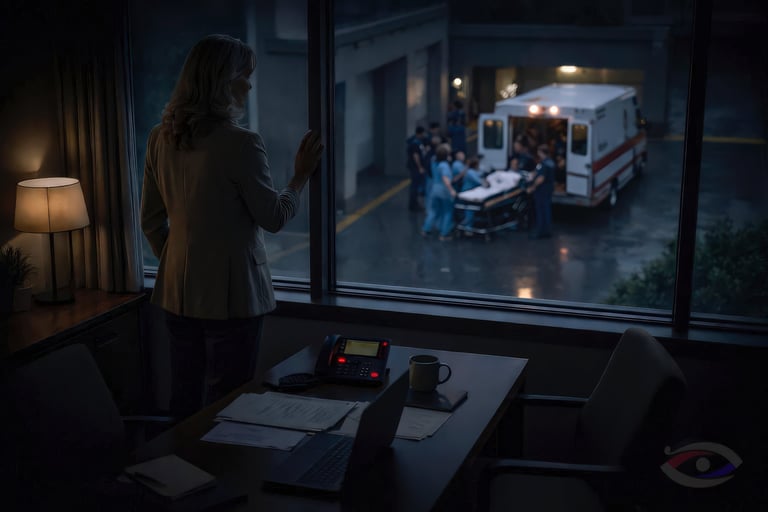
Clinical risk concentrates after hours, when the most experienced personnel may not be present. Variability in ultrasound skill during nights and weekends increases escalation, delays, and downstream cost.
Team-wide, protocol-driven competency ensures reliable after-hours performance, improving response in critical scenarios regardless of who is on duty.
Fragmented Peer-to-Peer Training.
Result is protocol drift, uneven performance, and hidden training costs.
Internal training is often fragmented, inconsistent, and difficult to sustain:
Senior staff lack protected time or incentive to train.
Teaching reflects individual habits rather than full protocols.
Critical steps are unintentionally omitted or altered over time.
Result is operational uncertainty and individual/departmental credentialing complexity.
Variable scanning skill among staff.
Gaps between technical knowledge and clinical application.
Staffers may understand concepts academically but struggle to apply them under time pressure.
Physicians hesitate to rely on imaging when confidence in skill validation is unclear.
Training Clinicians Worldwide Since 1981.
Testimonials reflect individual learning experiences. Growth in skill and confidence develops through guided training, continued practice, and personal commitment.
Contact Us
972 | 353-3200 USA Central Time
Course Campus:
4300 Wingren Drive
Irving (Las Colinas), Texas 75039
Mail | FedEx Address:
Box 101
Colleyville, TX 76034
Legal & Administrative
Privacy Policy
Accessibility Statement
© Keith Mauney & Associates Ultrasound Training Institutes MMXXVI. All rights reserved.
Courses & Learning
Upcoming Course Dates
Your Skills-Building Experience
Hands-On POCUS- Point of Care Ultrasound
Hands-On Adult Echocardiography
Hands-On Transvaginal Pelvic Ultrasound
Ultrasound Physics
Cardiovascular Hemodynamics
EKG- From Atoms to Arrhythmias